This is the opening introductory section from my article, ‘Fragments of Time and Memory: Matter, Media and the Modern Auditory World’, in the European Journal of English Studies, Vol. 15 (2011), pp. 19-29:
‘The evidence of material life – its detritus, fragments and traces – is emblematic of a temporality that is increasingly defined by ‘everydayness’. We live in a time not only marked by reduced horizons on the future and a distant history, but – and not without coincidence – the evidence of ever-greater monuments to obsolescence . But, curiously, within the detritus of the intense passion for novelty that marks contemporary society, we are bequeathed also a different kind of matter in the form of fragments of time and memory. A photograph or a pop song, to cite two everyday examples, may possess a power far in excess of the modest intentions of their creators because they have the capacity to transcend time and place.’
For Walter Benjamin, recuperation of traces and fragments held not only a significant clue to the nature of time and memory in modernity, but promised also an awakening that would recast how history and progress might be understood. If we still live in an undeniably material culture - which shares much with Benjamin's modernity - it is no less true that we live in a time that is increasingly marked by intangible phenomena. From the invisible channels of a global economy almost wrecked by the trade in 'virtual' products, whose names — 'derivatives', 'futures' 'swaps' - reveal the likelihood of their materialising as less than their chances of remaining as mere tokens of some intangible potential, to a cultural life that is often driven by passing affective states - mood, feeling, emotion - everyday life seems to undergo a process of dematerialisation.
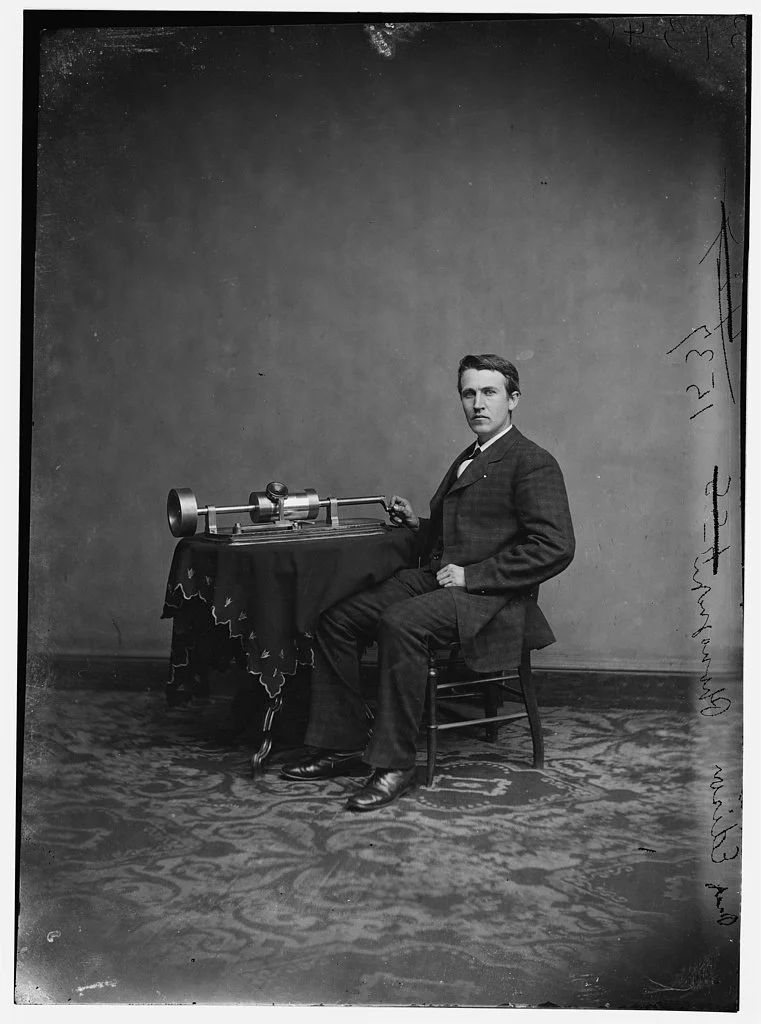
In this essay I want to try and enlarge our understanding of matter and material culture by looking at how media technology - and particularly the media of soundhas changed the way we occupy time, and at the kind of effects this has had on memory and self-identity. Sound, as Emily Thompson (2002: 12) writes, has the mysterious ability to melt into air'; it seems to be, indeed, a strange kind of 'weightless matter' (Kittler, 1999: 94). Bridging the realms of the material and the immaterial, the auditory world exists at the intersections of time, space and body. But, through its technological mediations, it has had a marked effect at different times on each of these experiential categories - one that is directly related to the material culture of the auditory world.’
Find the article here: LINK