'Art / Waste' in Throwaway: The History of a Modern Crisis, ed. Christine Dupont, Stéphanie Gonçalves & Emma Teworte (Luxembourg: Publications Office of the European Union, 2023), pp. 126-143
The second half saw the growth of vast landfill sites designed to absorb the rubbish of everyday life, which were located on the margins of our towns and cities.
These hypertrophied extensions of consumer life remained, for the most part, comfortably out of sight to most of us, ensuring that we could easily forget what we were throwing away. At the same time as all this rubbish was being spirited away to these places, it was also being valued for other reasons by a wide range artists, and often associated with new aesthetic ideas that attached a different significance to the leftovers of everyday life. This article looks at the work of a number of European movements and artists.
Read More'Surf Life, ou l’excès à l’ère du numérique' in Techniques & Culture, Vol. 65/66 (2016): ‘Repair the World’, pp. 494-501.
‘Surf Life’ is term that attempts to describe some of the characteristics and consequences of what I suggest is a new ecology of remembering and forgetting. The forms it takes, and the consciousness it seems to give rise to, cannot be separated from the ways in which we come to live in, and with, time and place as they are conditioned by the new digital technologies that suffuse everyday life. In relation to the everyday habits of contemporary western life, in particular, this ‘surf life’ might be thought of as a kind of ‘surfacing’ – a disengagement from the consequences of living through an excess of present moments that are quickly rendered obsolete by the arrival of new fascinations.
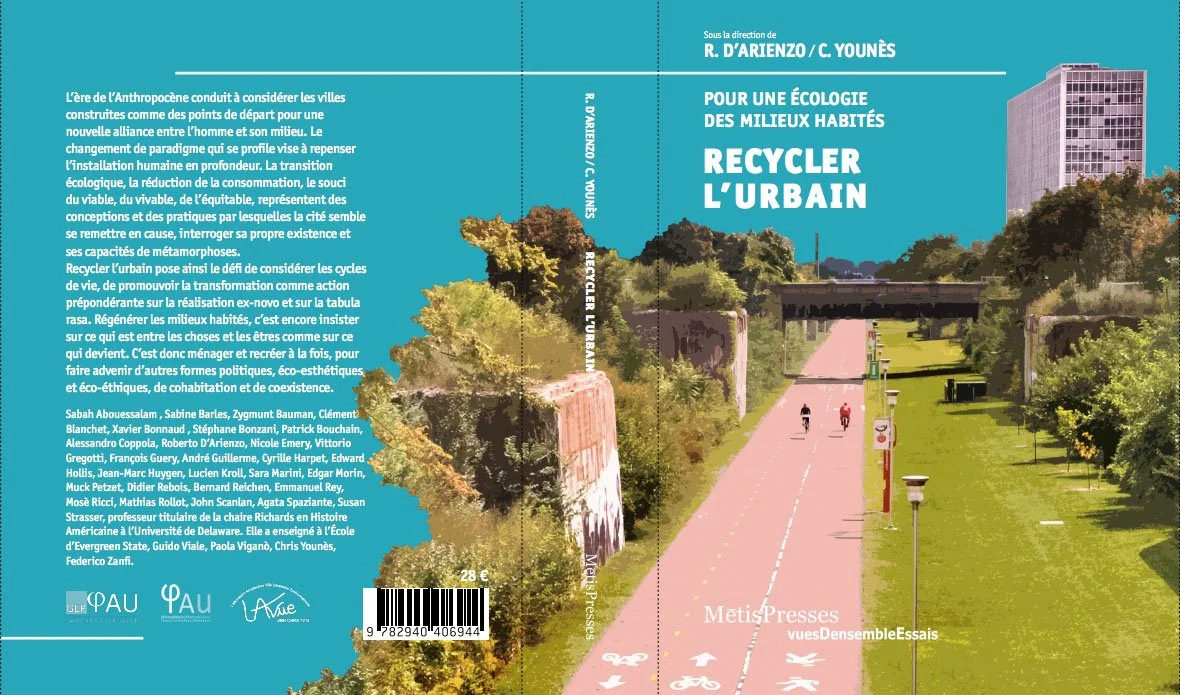
Read More‘The Language of Waste’ in Recycler l'urbain: Pour une Écologie des milieux habités
ed. Roberto D'Arienzo & Chris Younes
Geneva, MetisPresses, 2014, pp. 9-21
ISBN: 978 294040 6 94 4
While the language and terminology of ‘sustainability’ – which sees potential resources in waste – is commonly attached to large issues (the future of the environment, the planet, or human society thousands of years from now) the language of waste still allows us to comprehend more circumscribed or local ‘problems’ and solutions, all of which contribute to an understanding of how difficult it is, and has been to consider the possibility of a goal such as the goal of zero waste.
Read More