'Art / Waste' in Throwaway: The History of a Modern Crisis, ed. Christine Dupont, Stéphanie Gonçalves & Emma Teworte (Luxembourg: Publications Office of the European Union, 2023), pp. 126-143
The second half saw the growth of vast landfill sites designed to absorb the rubbish of everyday life, which were located on the margins of our towns and cities.
These hypertrophied extensions of consumer life remained, for the most part, comfortably out of sight to most of us, ensuring that we could easily forget what we were throwing away. At the same time as all this rubbish was being spirited away to these places, it was also being valued for other reasons by a wide range artists, and often associated with new aesthetic ideas that attached a different significance to the leftovers of everyday life. This article looks at the work of a number of European movements and artists.
Read More'Raymond Moore’s Uncertain Places,’ Photographies, Vol. 15, No. 2 (2022), pp. 225-239
This article examines the work of late British photographer Raymond Moore (1920–1987) and the ways in which his images of landscapes and objects allow us to understand his work as being driven towards encounters with what I term uncertain places, which is to say places in transition or between states of being that also point the observer of these images to that which lies beyond even photographically-aided perception.
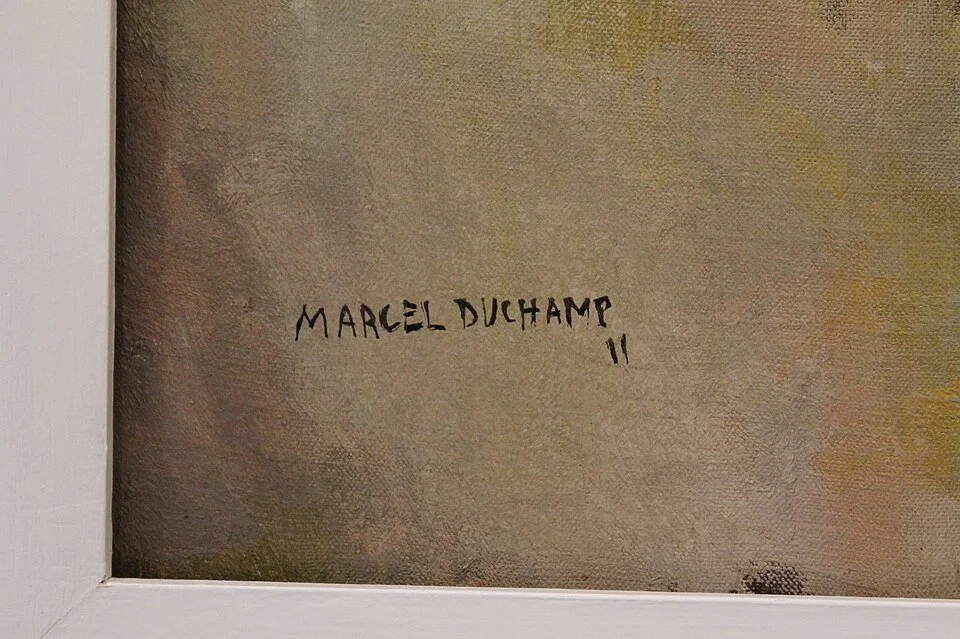
Read More‘Duchamp’s Wager: Disguise, the Play of Surface and Disorder,’ in History of the Human Sciences, Vol. 16: 3 (2003), pp. 1-20.
This article considers the notion of 'play' in the plastic arts as described by Johan Huizinga, its relation to the materiality of the art object, and how it could no longer be sustained following Duchamp’s introduction of the ‘readymade’. Duchamp's readymades force a re-evaluation of plasticity (and thus of Huizinga's definition of play), and introduce a permanent revolution of plasticity, which must be considered as the expression of an essential disorder underlying all appearances. I argue that Duchamp achieved this by employing strategies of disguise in order to lay bare the epistemic play of surfaces, and thus the contingency of knowledge and identity.
Read More